The Cutting Edge of Serration: What It Is, Why It Matters, and How Shun Does It Better
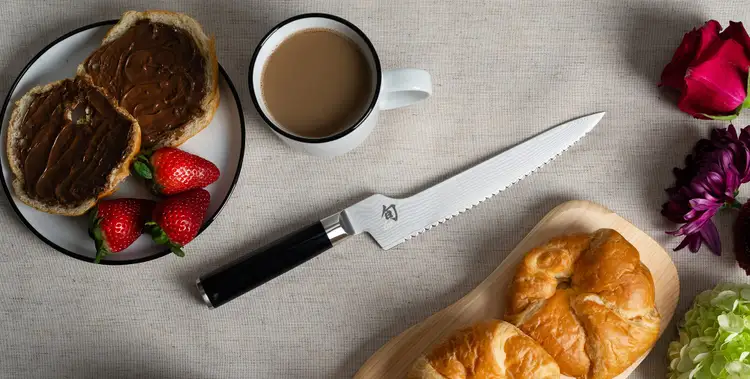
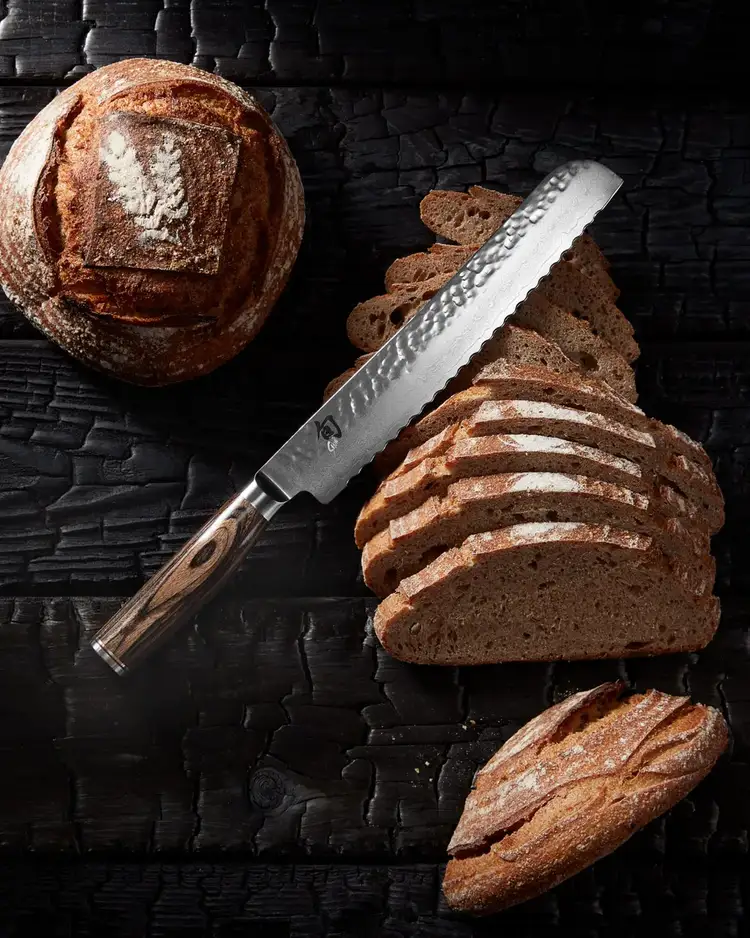
Classic 8.25" Offset Bread Knife
The Secret Edge: What Is a Serrated Knife—And Why You Need One
Whether you're slicing through crusty sourdough, a juicy tomato, or a thick sandwich roll, one type of blade consistently delivers: the serrated knife. Recognized by its tooth-like edge, the serrated knife grips and saws through tough exteriors and delicate interiors where straight-edged knives sometimes struggle.
So, what is a serrated knife exactly? Unlike a smooth-edged blade designed for clean push cuts, a serrated knife features peaks and valleys along the edge that concentrate force at contact points. This design lets you saw rather than slice—giving the blade a unique advantage in tackling slippery, crusty, or fibrous ingredients.
Most home cooks reserve serrated knives for bread alone, but that’s just the beginning. From tomatoes to citrus, cured meats to melons, a well-designed serrated knife is one of the most versatile tools in your kitchen.
At Shun, we don’t just add serration—we engineer it for performance, sharpness retention, and cutting pleasure. In this guide, we’ll explore how serrations work, when to use them, and what makes Shun’s innovative serration designs the new gold standard in the kitchen.
Key Takeaways
Serrated knives excel at slicing foods with tough exteriors and soft interiors, such as bread and tomatoes.
The tooth-like edge reduces crushing by gripping and cutting with minimal pressure.
Serrated blades require less frequent honing but still benefit from proper care.How Serration Works
How Serration Works
Serration is about physics as much as function. The pointed teeth of a serrated blade concentrate pressure at tiny contact points, enabling the blade to "bite" into food with minimal effort. As you draw the knife back and forth, these points saw through crusts, skins, or fibrous structures—resulting in cleaner cuts with less crushing.
This unique design also means that serrated knives stay sharper longer. Only the raised teeth make contact with cutting surfaces, so there’s less wear and tear overall.
When to Use a Serrated Knife
Serrated knives shine in specific kitchen scenarios:
Crusty breads that crush under a straight blade
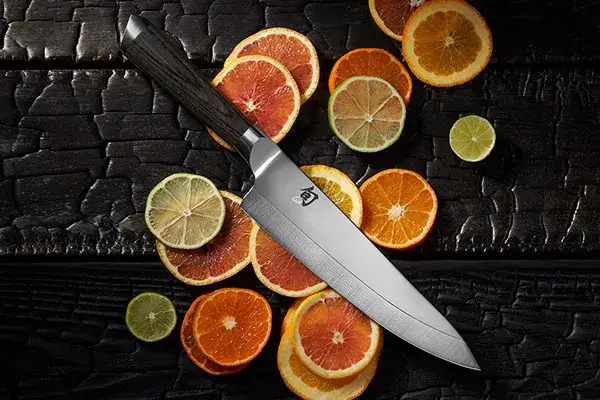
Tomatoes and citrus with slippery skins and soft interiors
Cakes or delicate pastries that need clean slices without smearing
Cured meats and sausages with firm casings
Sandwiches layered with hard crusts and soft fillings
When a straight-edge blade compresses or slips, a serrated knife cuts with control.
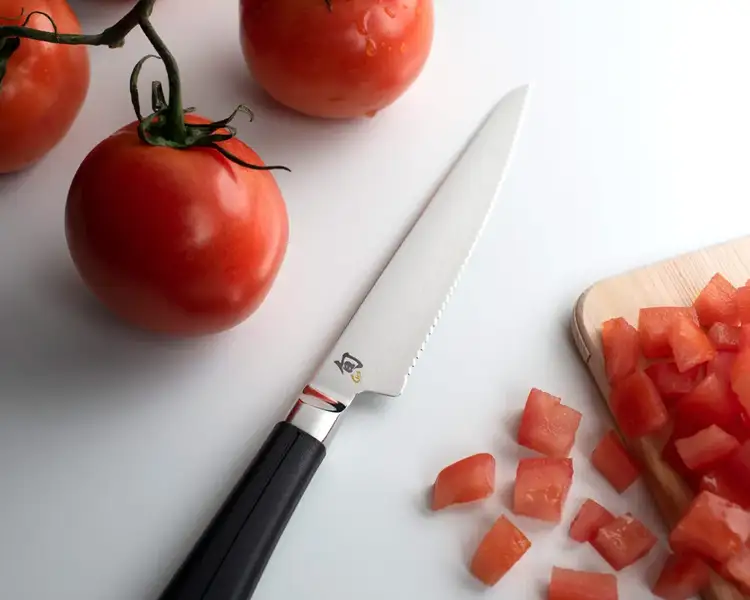
Sora 5.5" Serrated Utility Knife
Types of Serration Patterns
Not all serrations are the same. At Shun, we use a variety of serration types to match specific cutting needs:
Low-Frequency Serration: Fewer, deeper scallops for maximum cutting efficiency—ideal for bread and thick-crusted foods.
High-Frequency Serration: Smaller, tighter teeth for more aggressive cutting in a single draw.
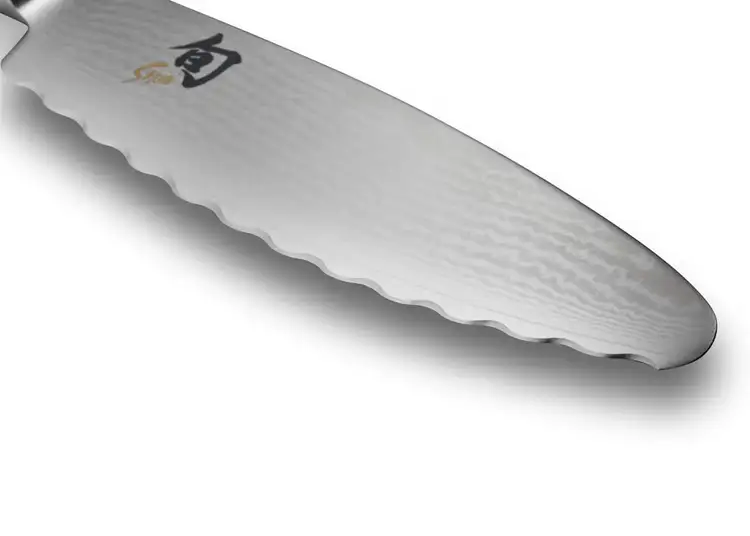
Scalloped Serration: Rounded, wave-like teeth that glide instead of tear.
Push-Pull Serration: Alternating forward/backward-leaning serrations for equal cutting power in both directions.
Combination Serration: Serrated tips with a smooth center section for tackling hard exteriors and tender interiors.
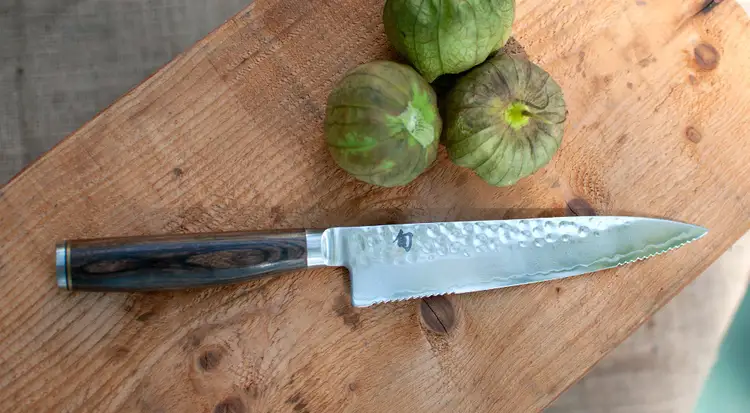
Premier 6.5" Serrated Utility Knife
The Shun Serration Difference
Shun serrated knives are purpose-built for culinary performance, longevity, and elegance. Each blade design is rooted in Japanese craftsmanship and fine-tuned for specific uses:
Ultimate Utility Knife
Low frequency serrations for maximum cutting efficiency.
With its wide-spaced, low-frequency serrations, the Shun Ultimate Utility Knife is a powerhouse for crusty sandwiches, fruits with tough skins, and everything in between. These scalloped edges bite cleanly into foods without tearing, while maximizing each stroke's effectiveness—making prep faster, smoother, and more precise.
A unique design to keep serrations sharp by reducing contact area with the cutting board.
Engineered for long-lasting performance, the Master Serrated Utility Knife uses a dual-frequency serration pattern that increases cutting surface without increasing blade length. Its innovative wave design ensures that only 1 in 10 serrations touches the cutting board—preserving sharpness far longer than conventional serrated knives. The smaller, high-frequency scallops add bite, making it highly effective on crusty, fibrous, or layered foods.
Low frequency serrations for maximum cutting efficiency.
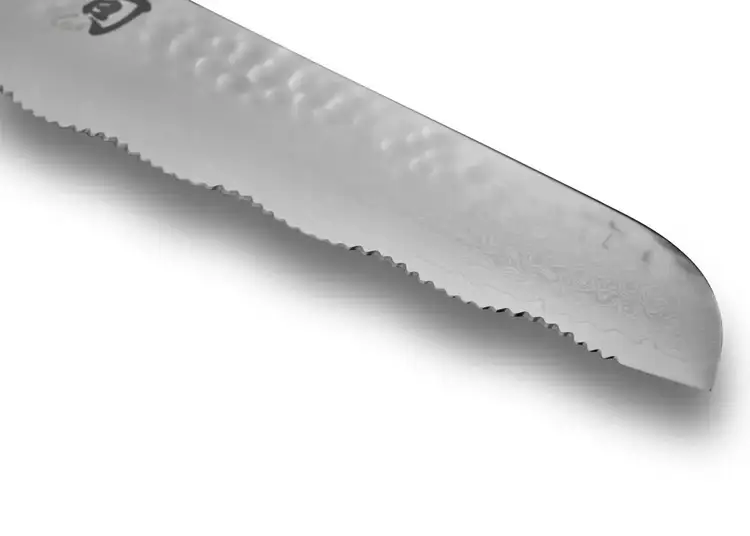
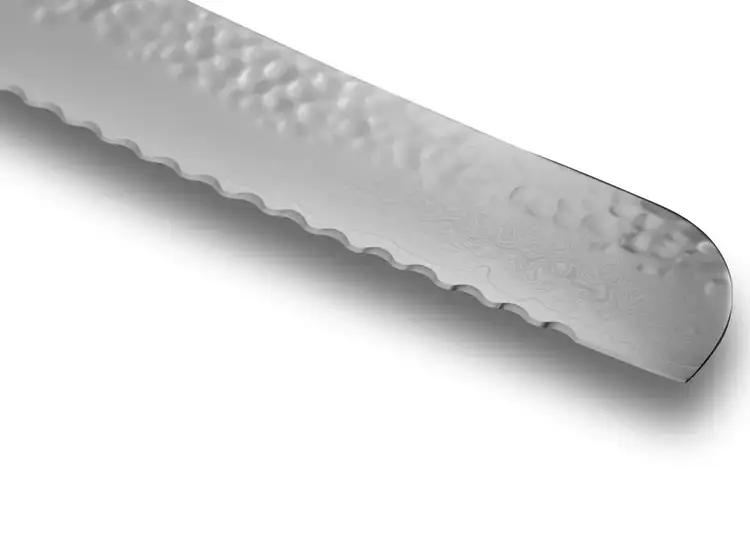
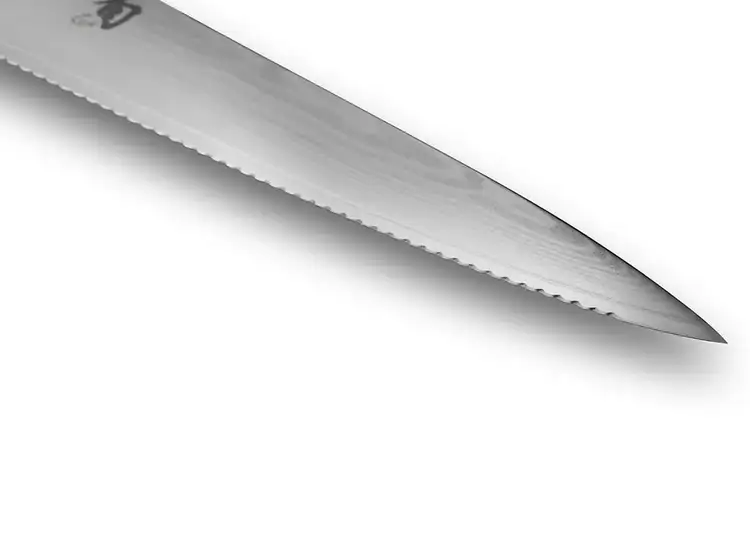
Most of our bread knives, including Classic, Premier, Kanso, and Kazahana feature a wide, undulating serration pattern that allows for ultra-smooth slicing through crusty loaves, tender cakes, and soft sandwich rolls. The design minimizes tearing and preserves the integrity of delicate interiors—bread never gets crushed, and your presentation stays perfect.
Scalloped serrations slice cleanly for a smoother, easier cut.
The Classic Offset Bread Knife features scalloped serrations that effortlessly glide through thick crusts without compressing the interior. The offset handle provides added knuckle clearance and leverage, making it the go-to choice for high-volume slicing or tackling artisanal loaves with tough exteriors and tender crumb.
Push-pull serrations for maximum cutting efficiency.
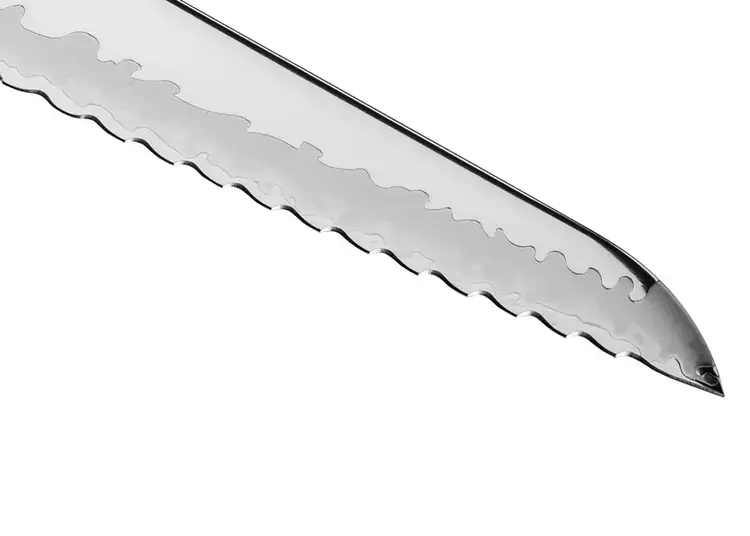
With its exclusive push-pull serration pattern, the Sora Bread Knife delivers exceptional performance in both the forward and backward stroke. Designed to maximize efficiency while minimizing pressure, these razor-sharp, wide serrations slice cleanly through even the most delicate loaves. You’ll notice the difference with every cut—no squashing, no shredding, just smooth, controlled slicing.
Unlike jagged sawtooth serrations, our utility serrations are rounded for a smoother, easier cut.
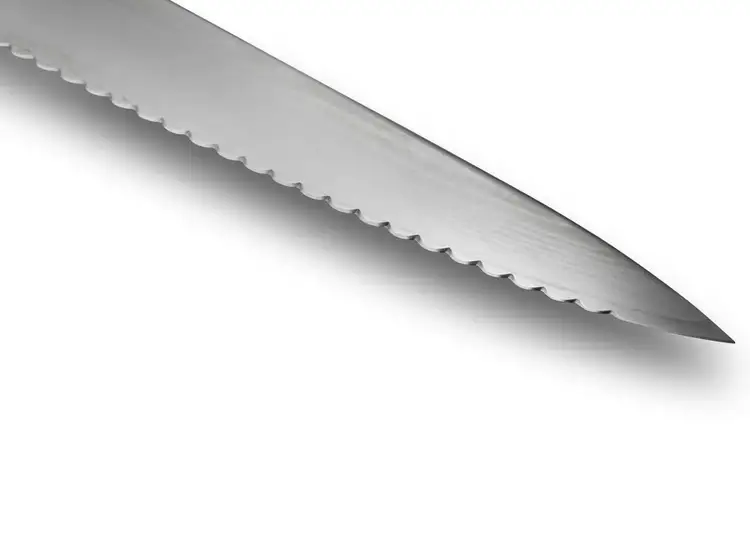
Our serrated utility knives are crafted with rounded serrations, not the harsh jagged teeth found on typical sawtooth blades. This gentler design glides effortlessly through citrus, tomatoes, cured meats, and crusty rolls—making them ideal for multi-purpose use. Whether you're making a charcuterie board or prepping a panini, these knives deliver clean, confident cuts.
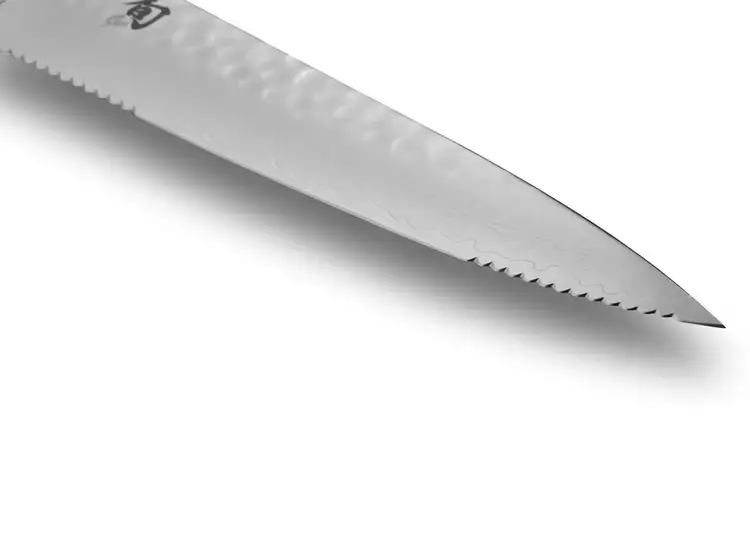
Serrations at the tip and heel go through tougher exterior and the smooth edge in the middle slices cleanly through a tender interior.
Designed for layered foods and specialty cuts, the Premier Serrated Utility Knife offers a split-edge design: serrations at the tip and heel tackle tough crusts or skins, while the smooth center edge glides through soft interiors without tearing. It’s perfect for sandwiches, rolls, and other foods that require precision from start to finish.
While serrated knives maintain their edge longer than smooth blades, they still benefit from proper care.
Sharpening vs Honing
Shun does not sharpen serrated knives through its sharpening service due to their complex geometry. Instead, we recommend honing with our KAI Serrated Knife Sharpener—a handheld tool that helps restore alignment and cutting performance.
Maintenance & Care Tips
Clean: Hand wash only; never use a dishwasher
Use: Make smooth, full draw cuts (avoid rocking or twisting).
Store: Use a knife block, in-drawer knife tray, sheath, or knife case to protect the edge
Conclusion: Choose the Right Serration for the Job
Serrated knives are more than just bread cutters—they’re versatile, efficient, and essential for any well-equipped kitchen. Whether you're slicing tomatoes or tearing through crusty baguettes, a serrated knife designed with purpose makes every cut easier and cleaner.
At Shun, our serrated knives are thoughtfully crafted to perform with maximum efficiency, minimal dulling, and exceptional precision—embodying our belief that beauty and function should always go hand in hand.
Frequently Asked Questions
What foods are best suited for a serrated knife?
Serrated knives are ideal for crusty bread, delicate pastries, tomatoes, citrus, and other foods with firm skins and soft interiors. The serrations grip the surface and slice cleanly without compressing the interior.
Do serrated knives need sharpening?
Serrated knives dull much slower than straight-edge knives because a majority of the cutting edge rarely interacts with the cutting board. Our Serrated Knife Sharpener is the best tool to use when the blades eventually dulls.
How does serration reduce crushing?
The pointed teeth break through tough surfaces first, allowing the blade to glide through softer interiors. This reduces pressure and preserves texture.
Should a serrated knife replace a chef's knife?
No. Serrated knives serve specific purposes, while chef’s knives handle the majority of slicing, chopping, and dicing tasks.Explore the full Shun collection to find the serrated knife that fits your culinary style.
The Shun Kagerou 8" Chef Knife has just received a 2025 Red Dot Award for Product Design. See what sets this exclusive, limited-edition knife apart from the rest.
Discover why Shun knives stand apart through centuries of Japanese craftsmanship, superior steel, and precision engineering. This article explores what makes Shun knives lighter, sharper, and more intuitive for effortless, elevated cooking every day.
Learn the anatomy of a Shun knife and how to hold it like a pro. This guide covers each part of the knife and demonstrates the chef’s grip, giving you better control, comfort, and cutting precision in the kitchen.
Chef Vitor Mendes shares his journey from Brazil to Brooklyn, his love for culinary craftsmanship, and how meaningful tools—like a great knife—help him express creativity and honor the flavors of the Amazon.
Mastering a few core knife cuts can transform your time in the kitchen. Whether you're prepping for a quick weeknight stir-fry or plating a dish with precision, the right cut enhances both flavor and presentation. With a Shun knife in hand, you’ll find each movement smoother, sharper, and more satisfying.
Learn essential cutting techniques for common kitchen staples like onions, bell peppers, and broccoli. This guide walks you through simple, effective steps to prep vegetables with confidence—using the right Shun knife for the job.
Discover the story behind the kiritsuke—its heritage, purpose, and what sets each Shun version apart. Precision, tradition, and performance come together in this iconic blade.