SHUN CUTLERY BLOG: BEHIND THE BLADE
The Craft of Butchery with Chef Kyle Morse
Chef Kyle Morse’s culinary journey has taken him from Michelin-starred kitchens in New York City to whole animal butchery and sausage making in Richmond, Virginia. Along the way, he discovered that butchery wasn’t just another skill, it was the craft that gave him clarity and purpose. In this edition of Behind the Blade, Kyle reflects on the chefs and family traditions that shaped him, the importance of mastering fundamentals, and why the right knife should feel like a natural extension of your hand.
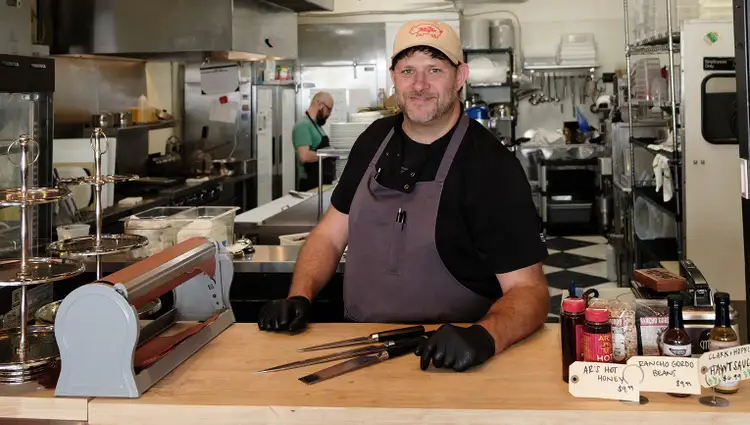
Tell us about yourself.
Kyle Morse: I grew up in New Hampshire, and yes, I ski. I played a bunch of sports and was a pretty active kid, although my family would probably call me lazy. I always loved food and wanted to try almost anything, especially the things other kids wouldn’t eat, like Brussels sprouts or beets.
I didn’t cook much growing up, but my family always gathered around great meals together. I first attended traditional college before eventually heading to culinary school at the Culinary Institute of America in Hyde Park, New York. After graduating, I moved to New York City and worked in several Michelin-starred restaurants, some of which I helped earn stars. Eventually, my wife, son, and I moved to Richmond, Virginia, where I opened The Mayor and focused on my passion for sausage making and whole animal butchery.
How long have you been in the culinary space?
Kyle Morse: I’ve been around the culinary world for about 30 years, but on a more serious professional level, I’d say around 20 years.
What brought you into the culinary world? Why butchery?
Kyle Morse: I was always fascinated by the culinary world, but what truly pushed me toward it was failing as a psychology major in college. I started taking cooking classes that I really enjoyed and decided to enroll in culinary school after graduating.
Butchery was always something I was interested in and worked around throughout culinary school and restaurant kitchens, but I never envisioned myself fully pursuing it. At one point, I realized I either needed to run my own kitchen or figure out another direction. I decided to give butchery a real shot before committing to leading a kitchen, and it immediately felt right. I had a level of clarity and purpose I hadn’t experienced before, and I knew pretty quickly that I wasn’t going back.
How did you learn?
Kyle Morse: Culinary school was the beginning of my journey, but most of my education happened on the job. Working in Michelin-starred restaurants in New York accelerated my learning tremendously. I had the opportunity to work under chefs like John Fraser, April Bloomfield, Marc St. Jacques, and Bill Telepan.
Were there any early food memories or experiences that inspired your love for the culinary community?
Kyle Morse: Family gatherings were a huge influence. We had plenty of traditional holiday foods like turkey, roast beef, ham, and casseroles, but we also had some unique traditions. We’d do full English breakfasts on Christmas morning and classic French Canadian dishes like cretons. Those experiences really shaped my appreciation for food and gathering around the table.
Who were your biggest influences?
Kyle Morse: Growing up, my biggest influences were my parents and my grandmothers. My mom especially had a huge impact on me. She made most of our meals from scratch, and her pies were incredible.
Professionally, each chef I worked for influenced me in different ways. Chef John Fraser taught me discipline and seasoning, especially how to push flavors while still maintaining balance. Chef Bill Telepan taught me about local sourcing and seasonality. Chef April Bloomfield taught me to trust myself and embrace who I am as a butcher and chef.
What was one of the most valuable lessons you learned during your training?
Kyle Morse: Don’t try to shape yourself into what you think other people want you to be. Stay true to yourself and your style of cooking. Also, understanding how to balance salt, acid, and fat is essential to making truly delicious food.
What are you most proud of in your career so far?
Kyle Morse: One thing I’m especially proud of was securing and fulfilling a wholesale order for Kroger. I had to raise a lot of money to make it happen, and while the partnership itself didn’t last, I’m incredibly proud that I was able to pull it off on my own.
How important are the tools you use in the kitchen, and why?
Kyle Morse: “Use the right tool for the job.” I don’t know who originally said it, but it’s absolutely true in cooking. The right tool can save time, money, and even your body from unnecessary strain. One of the first tools that was drilled into me during culinary school was a rubber spatula. My chefs called it a “money saver” because all those little scraps left in the bottom of a bowl eventually add up if you keep throwing them away.
What is the evolution of your relationship with knives in your career?
Kyle Morse: It really started in culinary school when I got my first proper knife set and knife bag. But what deepened my appreciation for quality knives was learning how to sharpen them properly on a whetstone. Once I understood how to care for knives correctly, I started to truly appreciate elegant, well-made blades.
What makes a great knife?
Kyle Morse: For me, it comes down to how the knife feels. Weight distribution, balance, and a little bit of heft are important. I don’t like knives that are too heavy, but I also don’t feel comfortable with something too lightweight.
What is your go-to knife?
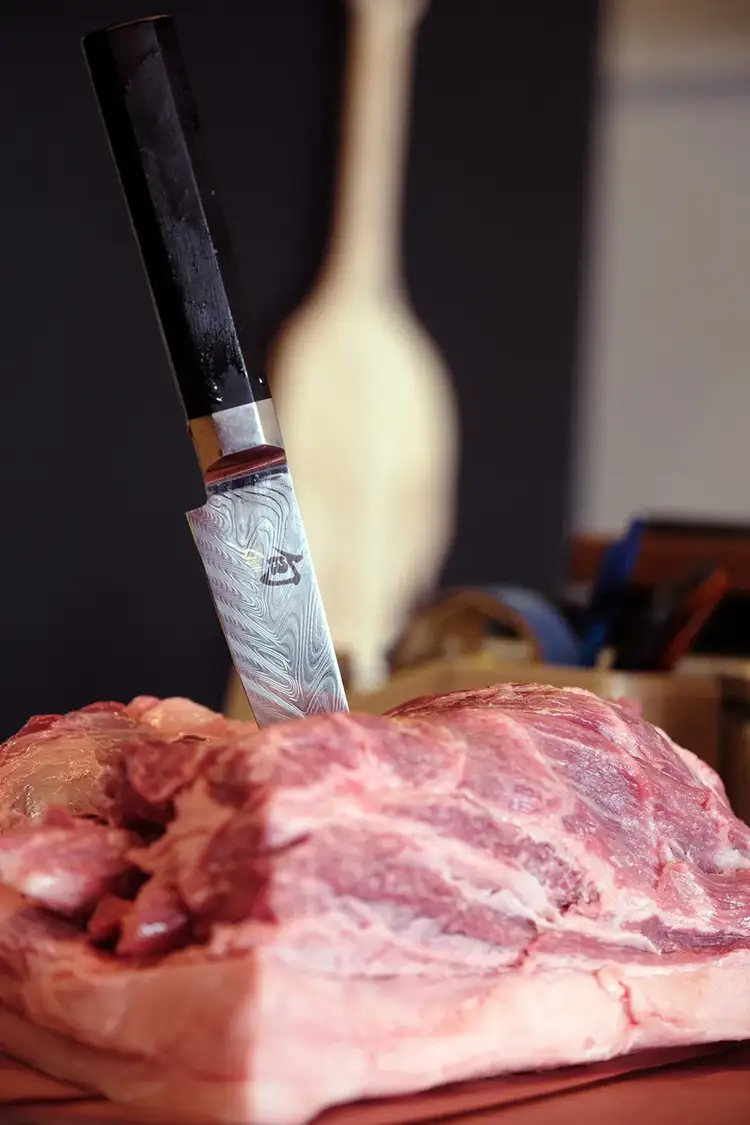
Kyle Morse: My go-to knife is my Shiranami 6.5-inch Nakiri. I’m not just saying that because I’m answering questions for Shun. It’s genuinely the knife I reach for most often. The weight and handling feel incredible.
Another knife I use constantly, which people always laugh about, is a small serrated paring knife.
What advice would you give to butchers or chefs who are just starting out?
Kyle Morse: Be quiet and listen. Don’t be afraid to ask questions, but learn when the right time is to ask them. Learning is the foundation of both cooking and butchery. One of the great things about butchery is that the structure remains the same from animal to animal. The biggest difference between a lamb, pig, or cow is really just size. Understanding those fundamentals is key.
Are there specific cuisines or traditions you feel especially connected to?
Kyle Morse: Being from New England, I’ll always feel connected to things like lobster and fluffernutter sandwiches. Professionally, though, I gravitate toward European cuisine, especially Spanish and English food. I’m fascinated by Spain’s regional meat culture and traditions. And while English cuisine gets a bad reputation sometimes, I love how rustic yet refined it can be, especially proper English pies.
What do you love about the DMV food and beverage community?
Kyle Morse: Two things really stand out to me in the DMV: the incredible diversity of food and the appreciation for keeping things simple and delicious.
What was a pivotal moment in your career that helped shape your culinary identity?
Kyle Morse: Going out to the Hamptons to work as a private chef was a huge turning point for me. It helped me understand who I was as a chef and what kind of food I actually wanted to cook. It gave me confidence in my craft and my ability to adapt. From there, I transitioned directly into butchery, where I found a way to take the foods I loved and turn them into interesting, seasonal sausages.
What’s your go-to meal?
Kyle Morse: My mom’s hamburger stroganoff. It’s my favorite meal, and honestly, it only tastes right when she makes it. If I’m cooking for myself, though, it’s usually something grilled like chicken, pork chops, or sausage with simple seasonal vegetables. In spring, I overload just about everything with ramps.
If you could make a meal for anyone in the world, who would it be and why?
Kyle Morse: My grandparents. They were such an important part of my culinary journey, and I’d want them to see how far I’ve come and know that all the support they gave me truly mattered. I know my grandma would cry immediately.
If you had to describe your culinary journey in one word, what would it be?
Kyle Morse: Educational.
Watch: Chef Kyle Morse on Crafting Quality with Precision
Recent Articles
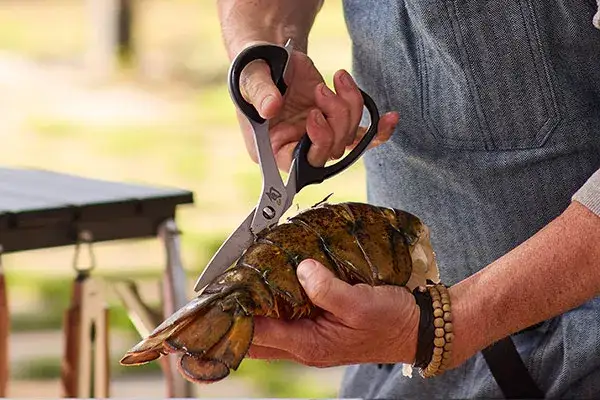
KNIFE KNOWLEDGE | What You Didn’t Know You Could Do With Kitchen Shears
Kitchen shears are one of the most overlooked tools in the kitchen. Explore how they bring speed, control, and precision to everyday prep, and why they deserve a place alongside your knives.
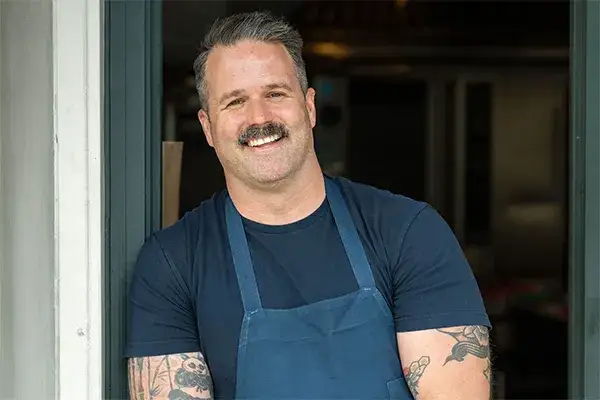
BEHIND THE BLADE | Refined Over Time: Chef Avery Hardin on Tools, Technique, and Growth
With 25 years in the kitchen, Chef Avery Hardin shares how experience, consistency, and the right tools continue to shape his craft.
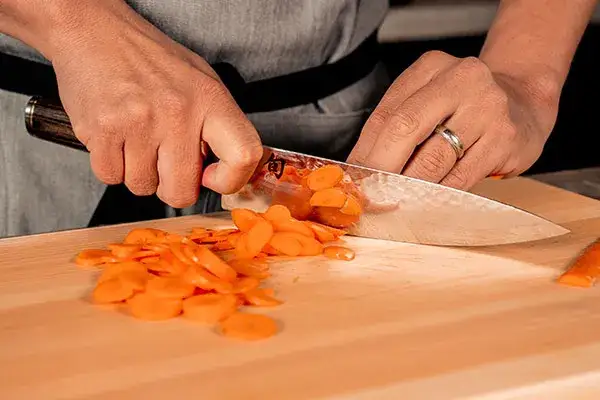
KNIFE KNOWLEDGE | Shun 101 Part 1: Why Shun Knives Feel So Different
Discover why Shun knives stand apart through centuries of Japanese craftsmanship, superior steel, and precision engineering. This article explores what makes Shun knives lighter, sharper, and more intuitive for effortless, elevated cooking every day.
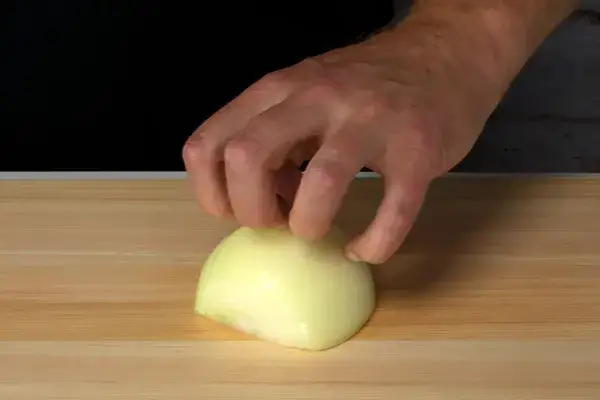
KNIFE KNOWLEDGE | Shun 101 Part 2: Knife Anatomy and the Perfect Chef’s Grip
Learn the anatomy of a Shun knife and how to hold it like a pro. This guide covers each part of the knife and demonstrates the chef’s grip, giving you better control, comfort, and cutting precision in the kitchen.
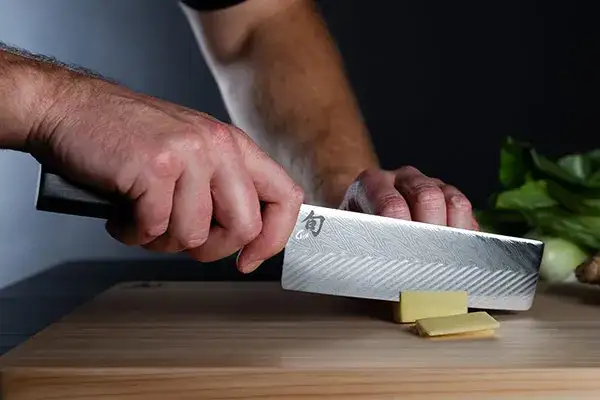
KNIFE KNOWLEDGE | Shun 101 Part 3: Essential Knife Cuts Every Home Chef Should Master
Mastering a few core knife cuts can transform your time in the kitchen. Whether you're prepping for a quick weeknight stir-fry or plating a dish with precision, the right cut enhances both flavor and presentation. With a Shun knife in hand, you’ll find each movement smoother, sharper, and more satisfying.
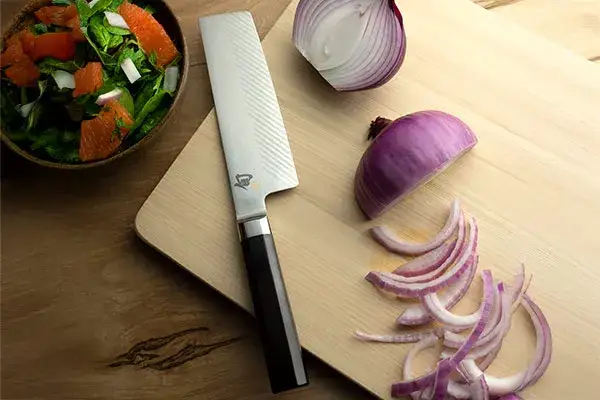
KNIFE KNOWLEDGE | Shun 101 Part 4: Knife Techniques for Everyday Ingredients
Learn essential cutting techniques for common kitchen staples like onions, bell peppers, and broccoli. This guide walks you through simple, effective steps to prep vegetables with confidence—using the right Shun knife for the job.
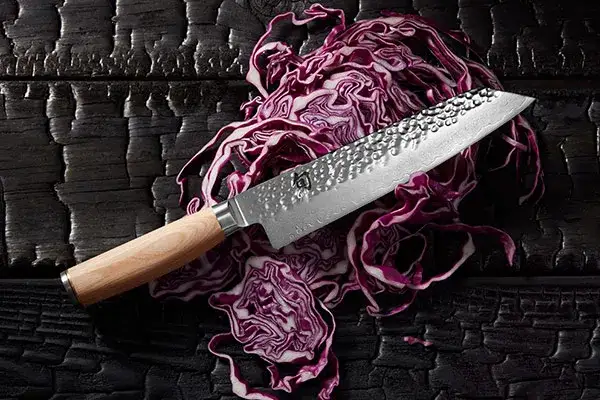
KNIFE KNOWLEDGE | Know Your Knife: Mastering the Kiritsuke Knife
Discover the story behind the kiritsuke—its heritage, purpose, and what sets each Shun version apart. Precision, tradition, and performance come together in this iconic blade.